
Send a digital scan
From any major intraoral scanner (iTero, Medit, 3Shape) or email us STL/PLY/OBJ files.
How to connectMSi, Silensor-SL and fused mandibular advancement appliances — comfortable to wear, built to your prescription, and made to help patients and their partners get a better night's sleep.
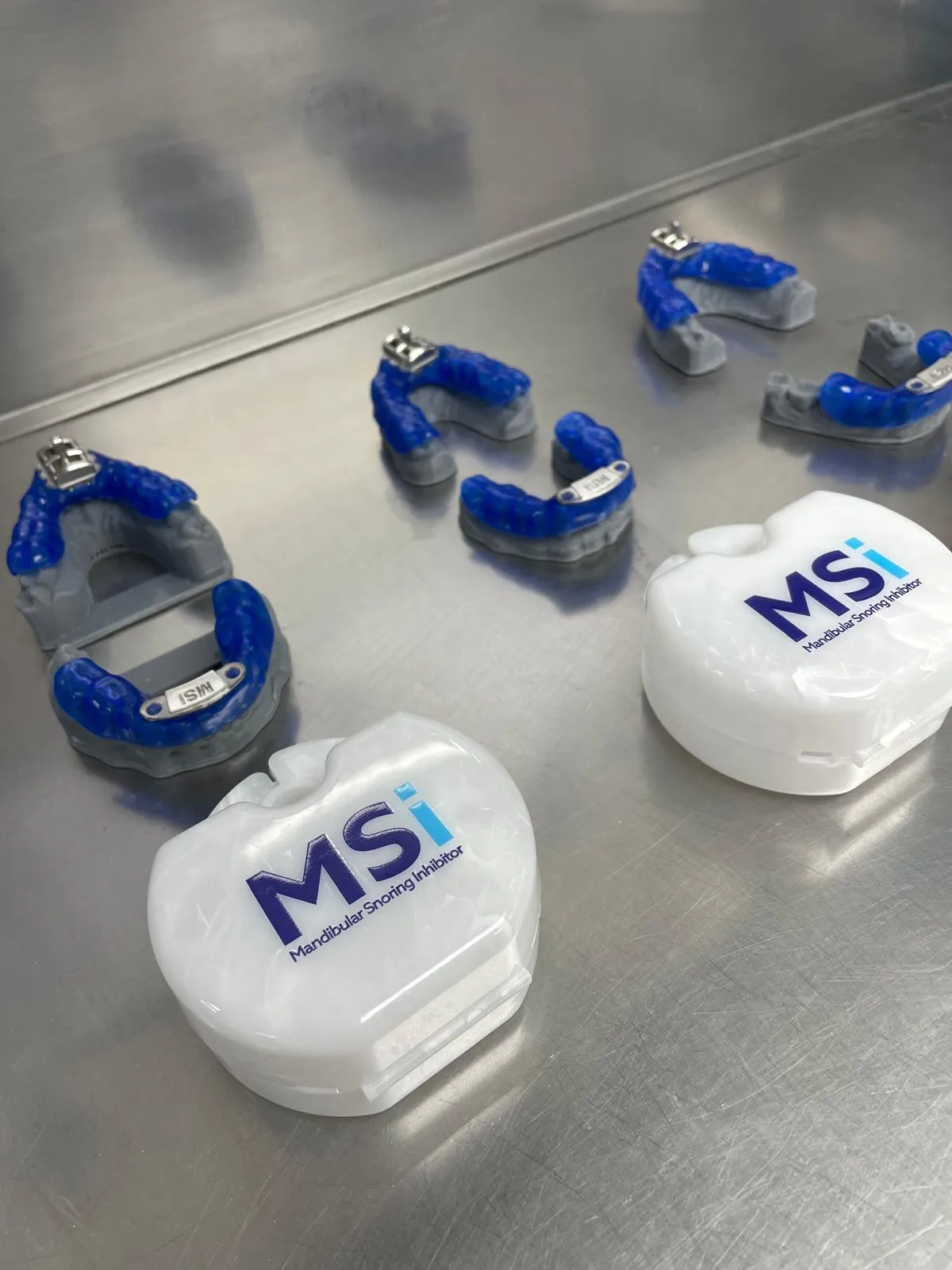
Snoring happens when soft tissues at the back of the throat vibrate during sleep. As the body relaxes, the airway narrows — and the air rushing through the smaller space causes tissues to vibrate.
Every BDL snoreguard works the same way: it gently advances the lower jaw forward during sleep. This moves the base of the tongue out of the airway and opens the pharyngeal space, so air can pass through without tissue vibration.
Patient wears the custom-fitted appliance at night
Lower jaw is held in a slightly protruded position
Airway opens, tissue vibration stops, snoring reduces or ends
The snoreguard holds the lower jaw slightly forward, opening the airway so air passes through without vibration.
Tap any appliance to see pricing, specs and ordering details.
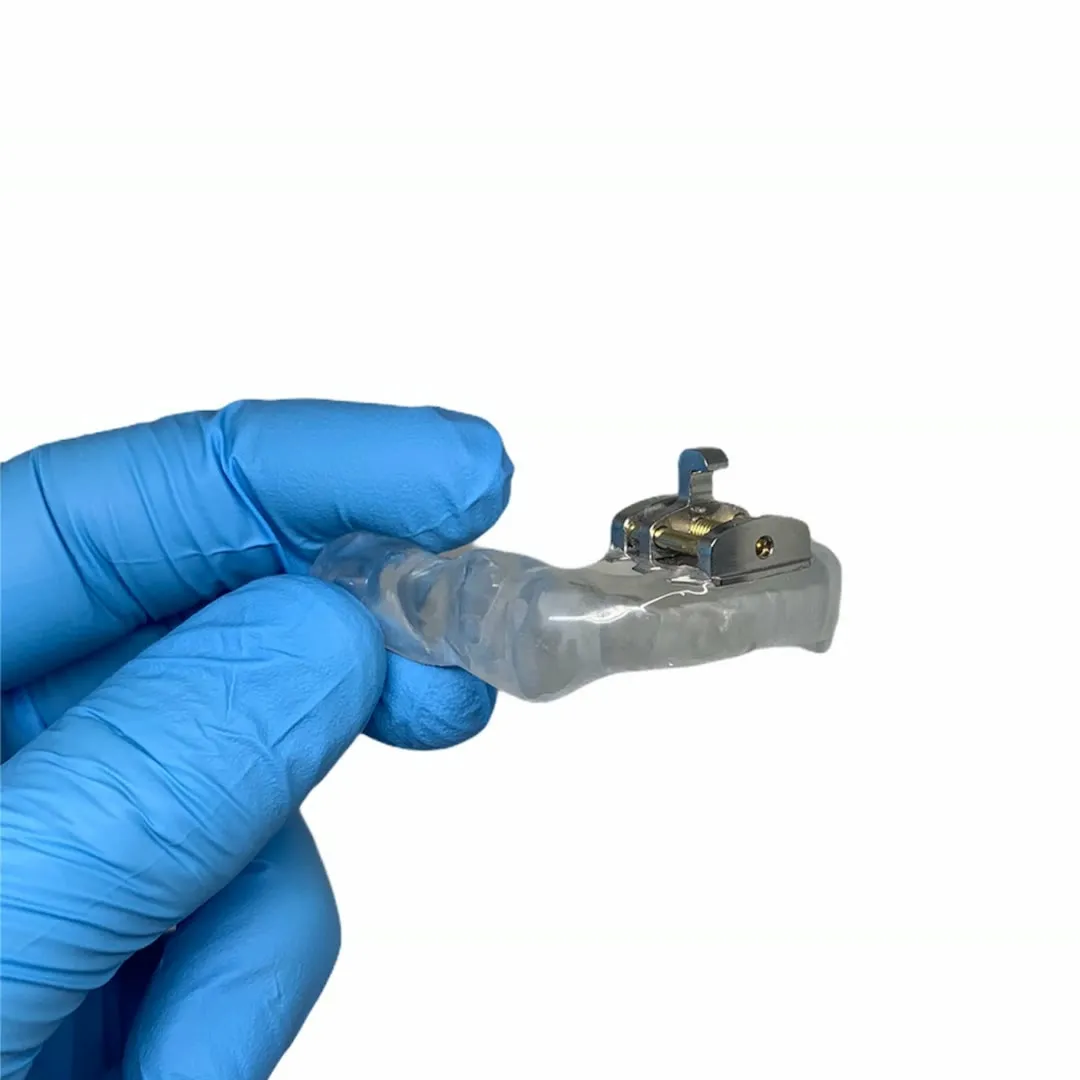
An adjustable MAD with up to 11mm of protrusive adjustment and a robust three-bar-hook design built to withstand heavy bruxism.
View details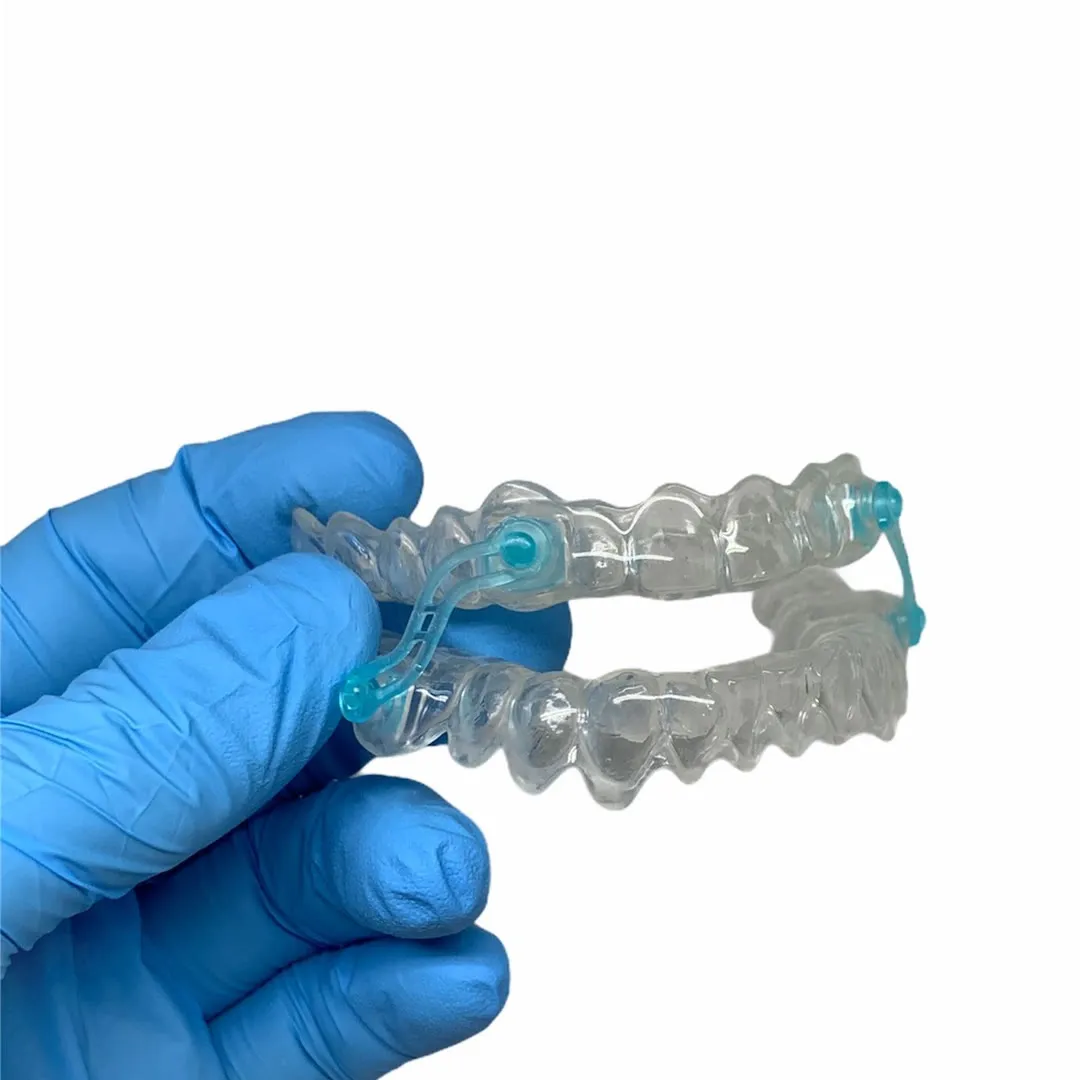
Two splints joined by flexible lateral connectors that hold the lower jaw forward — slim and comfortable, and clinically shown to reduce snoring in over 80% of patients.
View details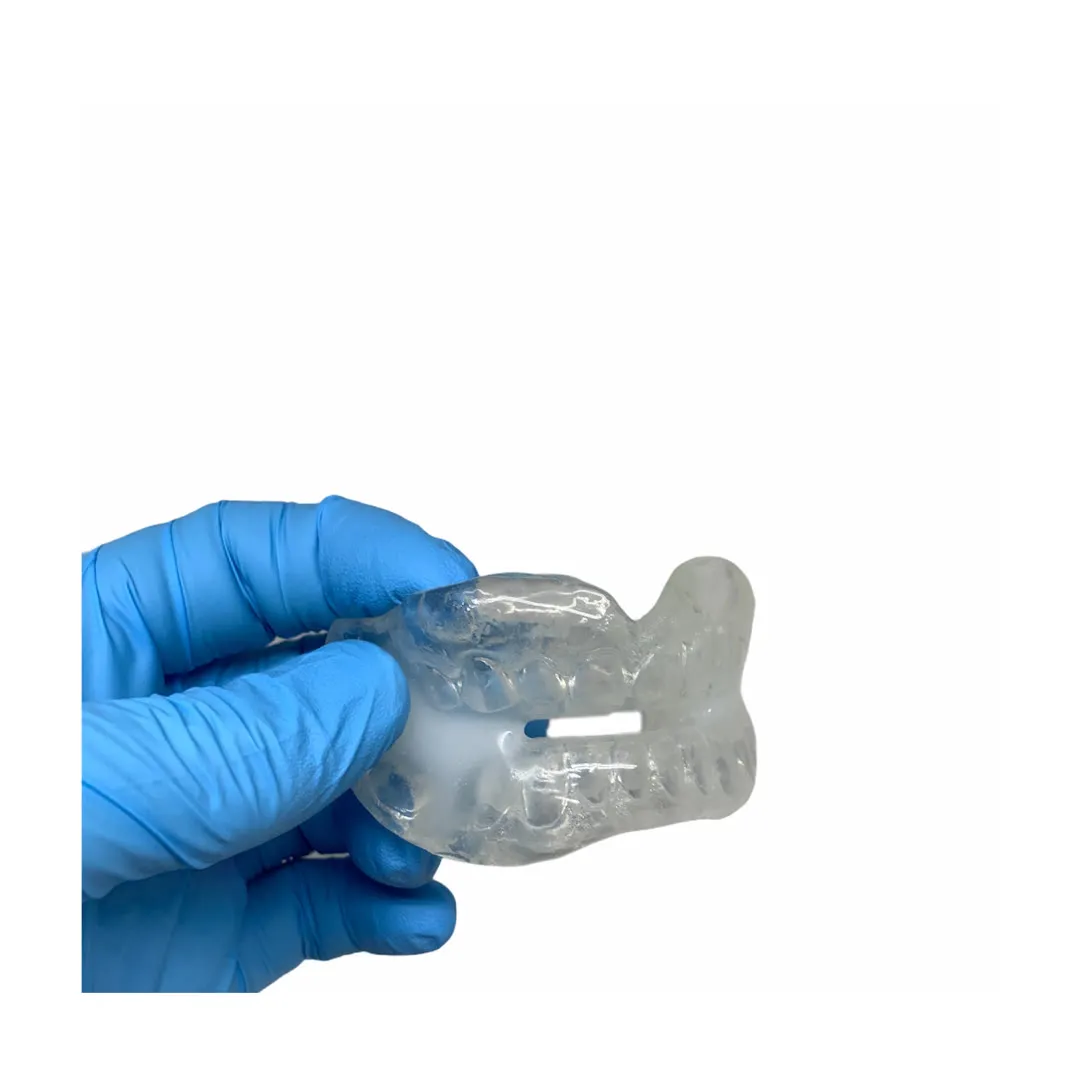
A single-piece appliance set with the mandible protruded to maintain the airway all night. No hinges, no connectors — robust and low-maintenance.
View detailsWe also make bespoke snoring and sleep appliances. Get in touch and we'll build to your prescription.
Get in touchAnswer a few quick questions and we'll suggest an appliance to discuss for your case — a guide for dental professionals, not a prescription.
Scan or impression — whichever your practice prefers.
From any major intraoral scanner (iTero, Medit, 3Shape) or email us STL/PLY/OBJ files.
How to connectAlginate or silicone in a rigid tray with a bite registration — or ask about free collection.
Arrange collectionFrom scan requirements to warranty terms — here's everything you need to know before prescribing.
We need upper and lower scans or impressions, plus the bite recorded in a protrusive position — as far forward as the patient feels comfortable. This tells us how much jaw advancement to build into the appliance.
All snoreguards come with warranty coverage, subject to fair wear and tear:
Damage caused by incorrect insertion, removal or poor care isn't covered. We supply an advice leaflet with every appliance — extra copies available on request.
Our standard turnaround for snoreguards is 7–10 working days. Express services are available for patients who need theirs sooner — get in touch to discuss.
A professionally-made snoreguard is custom fitted using precise impressions or scans and a proper protrusive bite registration. This ensures a secure, comfortable fit and optimal jaw positioning to keep the airway open throughout the night.
Over-the-counter devices use generic moulds that often fit poorly, cause discomfort, and can't deliver the precise jaw advancement needed for long-term efficacy.
After the initial 6-month warranty we recommend an appliance service — we'll clean and adjust the guard where needed.
Servicing is most important for the Silensor-Sl, though Fused and MSi appliances can also benefit. For Silensor-Sl, a re-hinge can be included in the service if required. We also supply instructions for changing the connectors.
Open an account, request a price list, or just send a scan — we'll take it from there.